
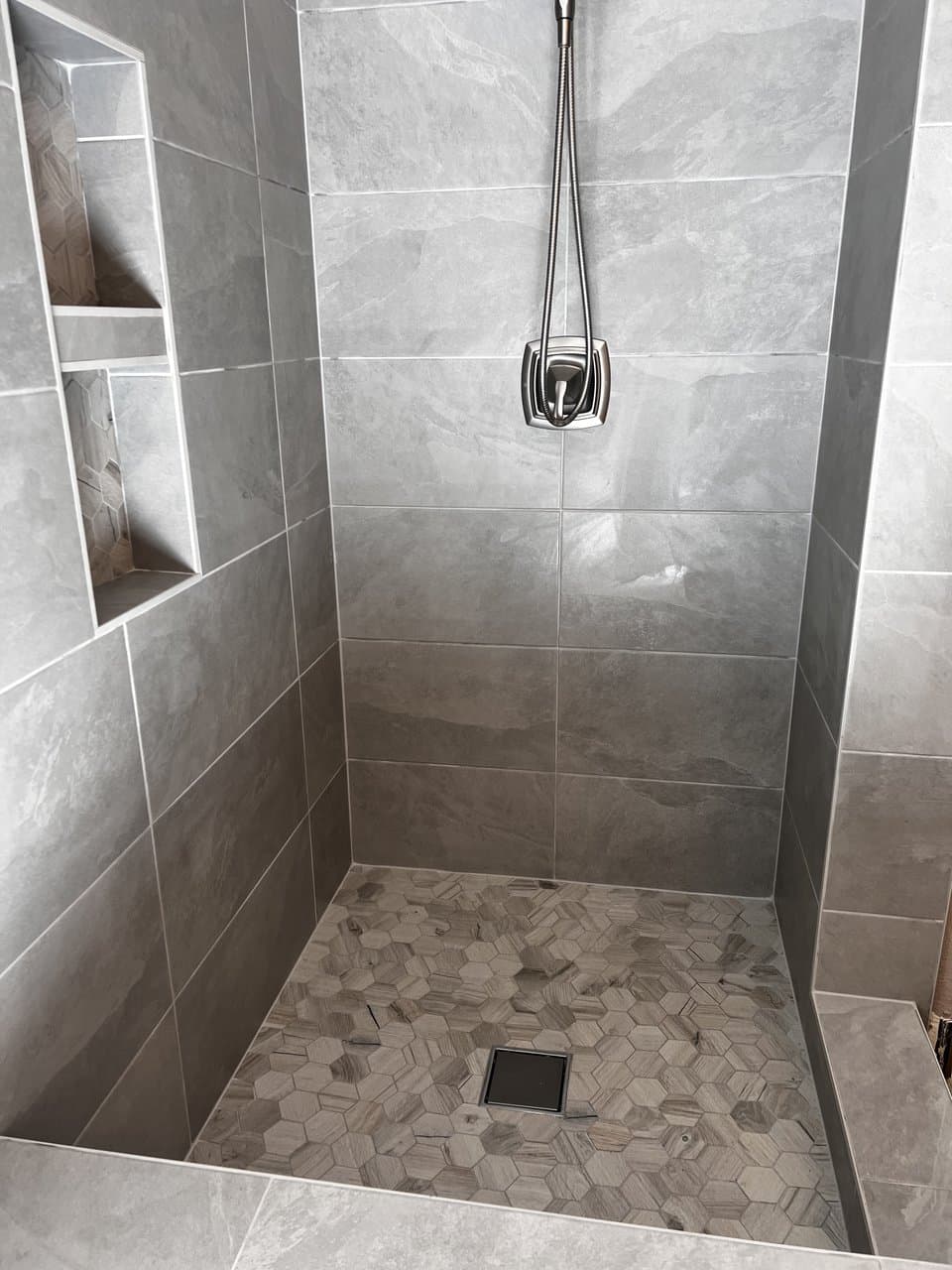
We get calls every week from Sacramento homeowners who had tile installed by someone else and something has gone wrong. Sometimes it's a small annoyance they've been living with for months. Other times, it's a ticking time bomb that's quietly causing thousands of dollars in damage behind walls and under floors.
The tricky part about bad tile work is that it often looks perfectly fine for the first few months. The installer finishes, the grout dries, everything looks clean and new, and you're happy with the results. But the problems lurking underneath have a way of revealing themselves 6 to 18 months later, long after the installer has cashed your check and moved on to the next job. Corners start cracking. Tiles sound hollow when you walk on them. Grout begins crumbling in the shower. By the time you notice, the window for an easy fix has usually closed.
The good news is that most tile installation problems follow predictable patterns. If you know what to look for, you can catch issues early and address them before they escalate. Here are the five most common warning signs that your tile wasn't installed correctly, along with honest guidance on what you can do about each one.
Sign #1: Tiles Are Cracking for No Apparent Reason
This is the one that alarms homeowners the most, and understandably so. You walk through your kitchen one morning and notice a hairline crack running through a floor tile. Then you spot another one a few feet away. Nobody dropped anything heavy. Nothing obvious happened. The tiles just cracked on their own.
Here's what most people don't realize: tile itself is incredibly strong. A properly installed porcelain tile can handle enormous amounts of weight and impact. If your tiles are cracking, the problem is almost never the tile itself. The problem is always underneath.
The most common cause is inadequate subfloor preparation. If the subfloor flexes even slightly under foot traffic, that movement transfers directly into the tile and eventually causes it to crack. This is especially common in homes with plywood subfloors that weren't properly reinforced before tiling. The industry standard calls for a minimum of 1-1/4 inches of combined subfloor and underlayment thickness for tile installations, but we regularly see jobs done over a single layer of 3/4-inch plywood.
Another frequent culprit is what's called "spot bonding" -- when the installer puts dabs or blobs of thinset on the back of the tile instead of using a notched trowel to achieve full, even coverage. Spot bonding leaves large air pockets under the tile, creating weak points that crack under pressure. It's a shortcut that saves the installer time but costs the homeowner dearly.
On concrete substrates, existing cracks in the slab will telegraph through the tile unless an uncoupling membrane is installed first. If your installer laid tile directly over a cracked concrete floor without any crack isolation, those cracks will eventually mirror themselves in your tile.
What to Do About It
Have a professional assess the subfloor condition. If the tiles were spot-bonded, they'll need to come up entirely -- there's no way to fix insufficient thinset coverage after the fact. If the issue is a cracked concrete slab, an uncoupling membrane like Schluter Ditra can be installed during the replacement to prevent the problem from recurring. If the subfloor is too thin or too flexible, it will need to be reinforced or replaced before new tile goes down. Replacing a few cracked tiles without addressing the underlying cause will only result in more cracking down the road.
Sign #2: Hollow-Sounding Tiles (The "Knock Test")
This is one of the easiest problems to check for yourself, and it's something every homeowner should do periodically. Take a coin or use your knuckle, and tap on the surface of your tiles. A properly bonded tile will produce a dull, solid thud. A tile with an air pocket underneath will produce a distinctly hollow, ringing sound -- almost like tapping on a drum.
Walk around the room and tap different tiles. If you find one or two hollow spots in an otherwise solid installation, it's not ideal, but it's not necessarily a crisis. However, if a large percentage of your tiles sound hollow, you're looking at a systemic problem with thinset coverage. The installer either used improper technique, mixed the thinset incorrectly, or was rushing through the job.
Why does it matter? Hollow tiles are weak spots. On floors, they're far more likely to crack under normal foot traffic, heavy furniture, or the occasional dropped item. A solid tile can handle a lot of abuse. A hollow tile sitting over an air pocket has no support and will eventually fail. In showers, the problem is even more serious. Hollow spots behind wall tiles mean there are voids where water can collect and sit, potentially seeping behind your waterproof membrane and into the wall cavity. Over time, this leads to mold growth, wood rot, and structural damage.
What to Do About It
A few isolated hollow spots in low-traffic areas might be livable, especially if they're not in a wet area. But widespread hollowness means the job was fundamentally done wrong. The tiles will need to be removed and reinstalled with proper thinset coverage. For wet areas like showers, even a few hollow tiles should be addressed, because the risk of water intrusion is too significant to ignore. A professional can determine the extent of the problem and recommend whether a targeted repair or full replacement is the right approach.
Learn more about our tile repair services for hollow and debonded tiles.
Sign #3: Visible Lippage (Uneven Tile Edges)
Lippage is the technical term for when the edge of one tile sits higher than its neighbor, creating a noticeable "lip" that you can feel underfoot or catch your toe on. Run your hand across the surface where tiles meet -- the transition should feel smooth and even. If you can feel a distinct height difference, you're dealing with lippage.
The industry standard for acceptable lippage on tiles with grout joints of 1/16 inch or wider is about 1/32 of an inch -- barely perceptible to the touch. For tiles installed with narrower grout joints, the acceptable tolerance is even tighter. Anything beyond that is considered a defect and indicates a problem with how the tiles were set.
Lippage happens for a few reasons. The most common is an uneven substrate. If the floor or wall surface wasn't properly leveled before tiling, no amount of skill can make the tiles sit perfectly flat. The second most common cause is a failure to use tile leveling clips, which are inexpensive tools that hold adjacent tiles flush while the thinset cures. Professional installers use them routinely, especially with large-format tiles. The third cause is simply rushing -- not taking the time to back-butter tiles, check alignment, and make adjustments before the thinset sets up.
Lippage is especially noticeable and problematic with large-format tiles. A 24x48-inch tile has very little tolerance for an uneven surface. Even a small dip or hump in the substrate will cause the tile to rock or sit unevenly. This is why proper substrate preparation and self-leveling compound are so critical for large-format installations.
What to Do About It
Minor lippage can sometimes be addressed by grinding down the high edge with a diamond polishing pad, but this only works on unglazed porcelain or natural stone and changes the surface texture. Significant lippage -- the kind you can feel when walking barefoot or that catches furniture legs -- means the tiles were set on an uneven surface and really need to be reinstalled on a properly prepared substrate. There's no shortcut or after-the-fact fix for substrate problems.
Worried About Your Tile Installation?
If you're noticing any of these signs in your home, don't wait for the problem to get worse. Russell Tile can assess your existing tile work and give you an honest evaluation of what needs to be done.
Schedule an AssessmentSign #4: Grout Cracking, Crumbling, or Falling Out
Grout problems are probably the most common issue we see in homes with poorly installed tile. But not all grout problems are the same, and the cause determines the fix. It's important to understand what's happening with your grout so you can address the right problem.
Grout cracking along tile edges, especially at corners and where walls meet the floor: This is almost always a movement joint issue. Wherever two planes meet -- where a wall meets another wall, where a wall meets the floor, where tile meets a bathtub or shower pan -- there needs to be a flexible joint, not rigid grout. These areas experience constant, slight movement from building settling, thermal expansion, and everyday use. Rigid grout cannot accommodate that movement, so it cracks. The correct treatment at these transitions is color-matched silicone caulk, not grout. This is one of the most common installer mistakes we encounter. It's an industry standard that many installers either don't know about or choose to ignore because grouting is faster than caulking.
Grout crumbling and falling out of joints: This usually indicates a mixing or curing problem. Grout that was mixed too dry won't bond properly and will crumble within months. Grout that was mixed too wet will shrink excessively as it dries, leaving weak, porous joints. And grout that wasn't kept damp during its initial curing period (the first 24-72 hours) won't develop its full strength. In any of these cases, the grout will gradually deteriorate and fall out.
Grout discoloring in random patches: This is a red flag for moisture getting behind the tiles. When water penetrates the grout line and sits behind the tile, it can cause discoloration, efflorescence (white mineral deposits), or dark staining as it migrates back to the surface. If you're seeing this in a shower, it often means the waterproofing has failed or was never properly installed.
What to Do About It
If the problem is limited to corners, where walls meet floors, and around fixtures, the fix is relatively straightforward: remove the hard grout at those joints and replace it with flexible, color-matched caulk. This is one of the easier tile repairs and can make a noticeable difference. If grout is crumbling and failing across large areas, the grout will need to be carefully removed with an oscillating tool or grout saw and completely redone. This is tedious but effective work. If you're seeing discoloration that suggests moisture intrusion, the problem is deeper than the grout and needs professional investigation.
Our tile repair team handles grout removal and replacement throughout Sacramento.
Sign #5: Water Stains, Mold, or Musty Smells Near Shower Tile
This is the most serious sign on this list, and it's the one that demands immediate attention. If you're noticing water stains, persistent mold, or a musty smell anywhere near your shower tile, water is almost certainly getting behind the tile and into your wall or floor structure. The longer you wait to address it, the more extensive and expensive the damage becomes.
Here's something that surprises many homeowners: tile and grout are not waterproof. They slow water down, but they don't stop it. Every time you take a shower, small amounts of water pass through the grout lines and behind the tile. This is normal and expected. The thing that actually keeps water out of your walls and subfloor is the waterproof barrier installed behind the tile -- products like Schluter Kerdi, RedGard, or HydroBan that create a continuous waterproof membrane on the substrate before tile goes up.
When that waterproof barrier fails, or was never properly installed in the first place, water accumulates in your wall cavity. It saturates the backer board, soaks into the wood framing, and creates a perfect environment for mold growth and wood rot. The signs you might notice include: bubbling or peeling paint on the wall adjacent to the shower, dark spots or water stains on the ceiling below a second-floor bathroom, a persistent musty smell in the bathroom that doesn't go away with cleaning, or mold at grout lines that keeps coming back within days or weeks of being cleaned.
That last point is particularly telling. If you clean mold from your shower grout and it returns quickly, it's growing behind the tile where there's constant moisture. Surface cleaning will never solve a problem that originates behind the wall.
This Requires Immediate Professional Attention
Water damage behind tile is not a DIY fix. The tile needs to be removed, the extent of the damage assessed, any compromised framing or subfloor material replaced, proper waterproofing installed, and then the tile reinstalled correctly. The longer you wait, the more damage occurs to your home's structure. We've seen cases where a shower leak that could have been fixed for a few thousand dollars turned into a $15,000+ structural repair because the homeowner waited too long.
Learn about our waterproofing services and how we protect your home from water damage during every tile installation.
How to Avoid These Problems in the First Place
The best way to deal with bad tile installation is to prevent it from happening. If you're planning a tile project, here are the things that matter most when choosing an installer:
- Hire licensed, experienced installers. Check their CSLB (Contractors State License Board) license to verify it's active and in good standing. An unlicensed installer might be cheaper upfront, but you have no recourse if something goes wrong.
- Ask about their waterproofing methods. A good installer should be able to explain exactly what waterproofing system they use and why. If they can't answer this question clearly, that's a red flag.
- Ask about thinset coverage. Industry standards require 80% coverage for dry areas and 95% or greater for wet areas like showers. A professional installer should know these numbers without hesitation.
- Look at recent projects. Ask for photos or addresses of recent completed work. Better yet, ask for references from local homeowners and actually call them.
- Be cautious of the lowest bid. Tile installation is labor-intensive skilled work. If one bid is significantly lower than the others, ask yourself what's being cut -- corners on prep work, lower-quality materials, or less experienced labor. The cheapest bid is often the most expensive in the long run when you factor in the cost of repairs or a complete redo.
When to Call for a Professional Assessment
If you've noticed any of the signs described in this article, the smartest first step is to get a professional opinion. Not every problem requires a full tear-out. Sometimes a targeted repair is all that's needed. Other times, what looks like a minor issue on the surface is concealing more significant damage underneath. You won't know until someone with experience takes a close look.
Russell Tile offers evaluations of existing tile work. We can tell you honestly whether you're looking at a minor fix, a partial repair, or a situation that warrants starting over. We'd rather give you an honest assessment than sell you work you don't need. We handle tile repair and replacement throughout Sacramento, Carmichael, Folsom, Granite Bay, and surrounding communities. You can explore our service areas or contact us directly to schedule an evaluation.
Russell Tile
Licensed Tile Contractor | CSLB #941474
