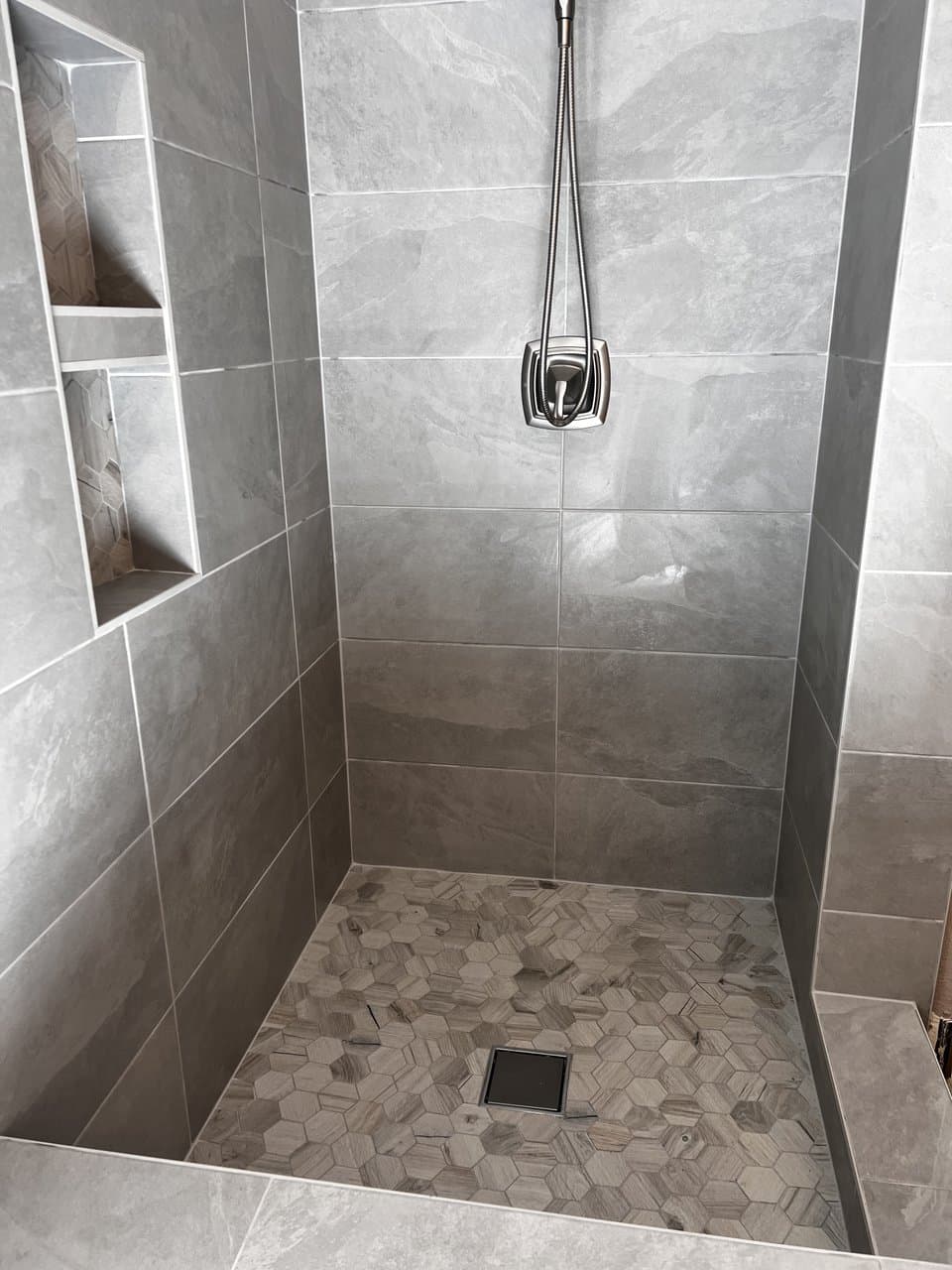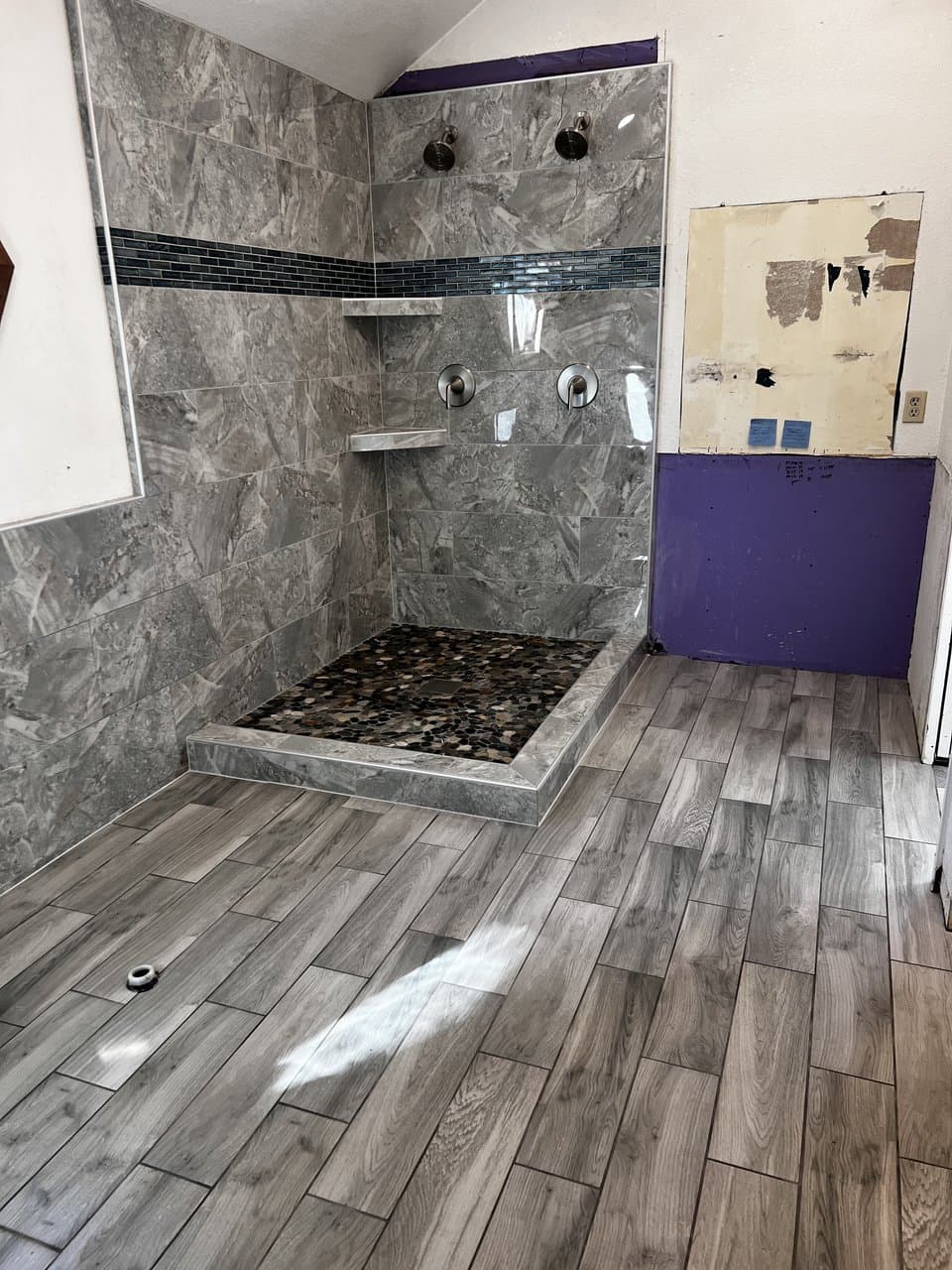
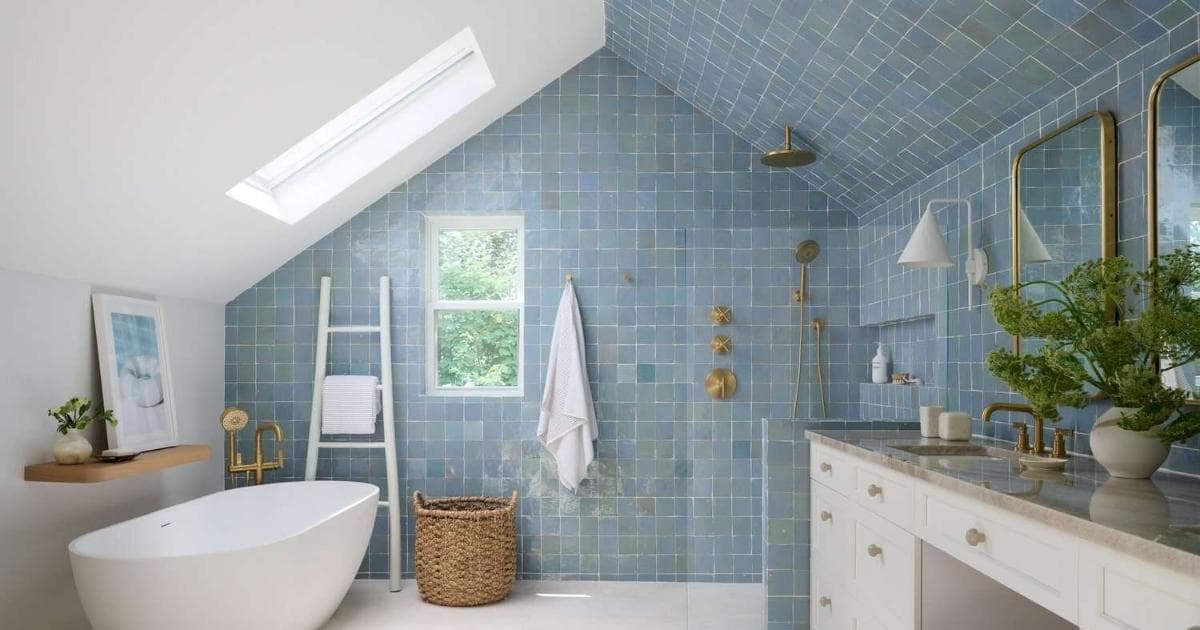
If you've been browsing bathroom design inspiration lately, you've probably noticed a striking pattern: bathrooms where the same tile covers absolutely everything. The floor, the walls, the shower enclosure, sometimes even the ceiling. There are no baseboards, no paint, no contrasting materials breaking up the space. This technique is called tile drenching, and it's the breakout bathroom trend of 2026.
The concept is deceptively simple. You choose a single tile and apply it to every surface in the bathroom, creating a seamless, immersive environment that wraps around you like a cocoon. The result is a space that feels larger, calmer, and unmistakably luxurious. It evokes the feeling of stepping into a high-end European spa or a boutique hotel bathroom, the kind of room where every surface feels intentional and considered.
What makes tile drenching especially exciting is how powerfully it transforms small bathrooms. In a compact space, the effect is almost magical. We've installed tile-drenched bathrooms in Sacramento homes where the room measured just 5 by 8 feet, and the homeowners consistently tell us the finished space feels nearly twice as large as it did before. It's a design trick backed by real visual science, and it's one we expect to see everywhere in the coming years.
Why Tile Drenching Works So Well in Small Bathrooms
The principle behind tile drenching is rooted in how the human eye perceives space. When you walk into a traditional bathroom, your eye is constantly stopping and starting. It hits the tile on the floor, then the baseboard, then the painted drywall, then the tile in the shower, then a different material on the ceiling. Each of those transitions creates a visual boundary, and each boundary makes the brain register a new surface and a new edge. In a small room, all those edges add up quickly, and the space starts to feel cramped and busy.
Tile drenching eliminates those visual breaks entirely. When the same tile runs from the floor up the walls and into the shower without interruption, your eye travels smoothly across the room without pausing. There's no baseboard to mark where the floor ends. There are no transition strips, no contrasting paint lines, no wainscot caps drawing horizontal lines across the walls. The surfaces flow into one another as a single continuous plane, and that continuity tricks the brain into perceiving more space than actually exists.
This effect is particularly relevant for Sacramento homeowners. Many of the region's most desirable neighborhoods are filled with older ranch homes, Craftsman bungalows, and mid-century houses that were built when a 40-square-foot bathroom was considered perfectly adequate. Neighborhoods like East Sacramento and Carmichael are full of homes with charming character but compact bathrooms. Tile drenching gives these smaller rooms a dramatic visual upgrade without the expense and disruption of moving walls or adding square footage.
Best Tiles for Tile Drenching
Not every tile is a good candidate for a full drench. Since you're covering every surface with the same material, the tile you choose needs to work hard in multiple roles: it has to be beautiful enough to look at from every angle, durable enough for a floor, practical enough for a shower wall, and safe enough to stand on when wet. That narrows the field considerably, but there are still excellent options available.
Large-format porcelain tile is far and away the top choice for tile drenching in 2026. Tiles measuring 24 by 48 inches or even 32 by 32 inches produce the fewest grout lines, which amplifies the seamless effect that makes this trend so appealing. The fewer lines your eye has to cross, the more continuous the room feels. Porcelain also has the technical properties you need for a drench: extremely low water absorption (under 0.5%), excellent durability, and availability in virtually any color and texture you can imagine.
In terms of color and finish, the most popular choices right now lean toward warm neutrals. Creamy limestone-look porcelain, soft travertine-look porcelain, and warm concrete-look porcelain are all moving very quickly at the tile showrooms we work with. These tones create a soothing, organic atmosphere that enhances the spa-like quality of a drenched bathroom. Cool grays still have their fans, but the market has shifted decisively toward warmth.
Matte finishes are strongly preferred over glossy ones for tile drenching. A matte surface looks more natural and understated when you see it on every surface in a room. Glossy tile can feel overwhelming at that scale and creates excessive glare under bathroom lighting. From a practical standpoint, matte finishes also provide better slip resistance on floors, which matters tremendously when you're using the same tile on the floor as on the walls. Speaking of which, any tile used for a drench must have an adequate coefficient of friction (COF) rating for floor use, typically 0.42 or higher. Your tile supplier can confirm this rating, and it's something we always verify before recommending a tile for a drenching project. You should also consider how the tile will perform in your shower where standing water and soap residue are everyday realities.
The Installation Challenge
We want to be straightforward about this: tile drenching is not a DIY project. It is one of the most technically demanding residential tile installations you can undertake, and the margin for error is extremely thin. When every surface in a room is covered with the same tile, any misalignment, uneven spacing, or sloppy transition is immediately visible. There is nowhere for imperfections to hide.
The first challenge is the substrate. Every surface that will receive tile must be perfectly level and plumb. On a standard bathroom remodel, you can sometimes tolerate minor variations in the walls because the tile covers some areas and paint covers others. With a full drench, the tile runs continuously from one plane to the next, and any deviation in flatness shows up as a lippage problem at the transitions. The floor has to be dead flat, the walls have to be dead plumb, and the corners where they meet have to be dead square, or the grout lines simply will not align from surface to surface.
Then there is the matter of grout line continuity. In a drenched bathroom, you want the grout lines on the floor to flow visually into the grout lines on the wall. That means the layout has to be planned meticulously in advance, accounting for the tile pattern on every single surface and ensuring that the lines will register correctly at every plane change. This requires careful measurement, precise cuts, and often a dry layout of the entire room before any adhesive is mixed.
Waterproofing is another critical concern. In a tile-drenched bathroom, the entire room is essentially a wet zone. Water can reach any surface through steam, splash, and direct spray. Every wall, the floor, and the ceiling (if tiled) must be properly waterproofed with a membrane system, not just the shower area. This is a significant upgrade from a traditional bathroom where only the shower stall receives waterproofing treatment. The cost and labor of waterproofing the entire room adds to the project scope, but skipping this step would be a serious mistake.
Finally, large-format tiles on walls present their own set of challenges. A 24-by-48-inch porcelain tile is heavy, and gravity wants to pull it off the wall while the adhesive is setting. Professional installers use high-performance polymer-modified thinset adhesives and often employ mechanical support systems like tile leveling clips and wedges to hold the tiles in place as they cure. Some installations require back-buttering the tile in addition to troweling adhesive on the wall to ensure 100% coverage and proper bond strength. This is where hiring an experienced tile contractor pays for itself many times over.
Tile Drenching vs. Traditional Bathroom Tile
It helps to understand tile drenching in the context of the three main approaches to bathroom tile. The traditional approach, which has been standard for decades, involves tiling only the wet areas of the bathroom. The shower enclosure gets tile on the walls and floor, the bathroom floor gets tile, and everything else, the walls above the shower, the area around the vanity, the ceiling, gets painted drywall. This is the most affordable option and it works perfectly well, but the visual result is a room made of clearly different materials.
The middle ground is what you might call partial drenching. In this approach, the shower enclosure is tiled floor to ceiling, and the rest of the bathroom might have a wainscot of tile running three or four feet up the walls with painted drywall above. This creates a more polished, cohesive look than the traditional approach without the full commitment of a complete drench. It's a popular option for homeowners who want to upgrade their bathroom's visual impact without the higher price tag of going all-in.
Full tile drenching is the most dramatic option. Every surface receives the same tile: floor, all four walls, inside the shower, and potentially the ceiling. The cost is higher in both materials and labor because you are tiling substantially more square footage, and the installation complexity is greater for the reasons we discussed above. But the visual payoff is extraordinary. A fully drenched bathroom looks and feels like a completely different category of room. It is calm, luxurious, and architecturally striking in a way that neither of the other approaches can match.
Design Tips from Our Sacramento Installations
After completing several tile drenching projects in the Sacramento area, we've gathered some practical design advice that makes a real difference in the finished result.
First, go as large as your room can handle with the tile format. Larger tiles mean fewer grout lines, and fewer grout lines mean a more seamless appearance. For most Sacramento bathrooms, a 24-by-48-inch tile is the sweet spot. It is large enough to minimize grout lines but not so large that it overwhelms a compact room. For slightly larger primary bathrooms, 32-by-32-inch tiles can work beautifully. The fewer visual interruptions across the surfaces, the more impactful the drench effect becomes.
Second, match your grout color as closely as possible to the tile color. The goal of drenching is seamlessness, and a contrasting grout color defeats that purpose by outlining every single tile in the room. If you are using a warm beige tile, use a warm beige grout. If you are using a gray concrete-look tile, use a matching gray grout. Epoxy grout is an excellent choice for drenched bathrooms because it resists staining and does not darken over time the way cement-based grout can.
Third, consider installing a linear drain instead of a traditional center drain. A standard round drain in the center of the floor requires the floor to slope from all four directions, which means cutting tiles at angles and creating a visual disruption in the tile pattern. A linear drain installed along one wall allows the floor to slope in a single direction, preserving the clean, unbroken tile lines that make a drench so visually powerful.
Fourth, introduce visual interest through texture variation rather than contrasting tiles. You can use the same tile in a matte finish on the walls and a slightly textured version on the floor for slip resistance. Some manufacturers offer the same tile in both finishes specifically for this kind of application. You maintain the color continuity while adding subtle tactile variety.
Finally, a single well-designed accent niche in the shower can provide just enough visual relief to keep a drenched bathroom from feeling monotonous. Line the interior of the niche with a contrasting tile, perhaps a handmade zellige tile or a mosaic, while keeping everything else in the room consistent. That small touch of contrast actually strengthens the overall effect by giving the eye one deliberate moment of difference within the seamless whole.
Want to See if Tile Drenching Works for Your Bathroom?
Every bathroom is different. Let us take a look at your space and help you figure out whether a full drench, a partial drench, or a different approach will give you the best result for your budget and goals.
Cost Considerations
There is no getting around the fact that tile drenching costs more than a traditional bathroom tile job. More tile means more material, and the increased complexity of the installation means more labor hours. A fully tile-drenched bathroom uses roughly two to three times the tile of a traditional bathroom where only the floor and shower walls are tiled.
To put some real numbers on it for Sacramento homeowners: a traditional tile installation in a standard bathroom, covering the floor and shower walls, typically runs between $3,000 and $6,000 for tile and labor combined. A partial drench, where the shower goes floor to ceiling and the rest of the bathroom gets a wainscot, might fall in the $5,000 to $9,000 range. A full tile drench covering every surface in the room generally costs between $8,000 and $15,000 or more, depending on the tile selected, the size of the bathroom, and the complexity of the layout.
Those numbers can cause sticker shock initially, but consider the visual return on investment. A fully drenched bathroom transforms a space in a way that few other renovations can match at any price point. It also adds real resale value; prospective buyers immediately recognize the quality and intentionality of a tile-drenched bathroom. Dollar for dollar, the visual impact is excellent, particularly in small bathrooms where the total square footage of tile is manageable and the perceived size increase is most dramatic.
Is Tile Drenching Right for Your Bathroom?
Tile drenching is a powerful design technique, but it is not the right choice for every situation. Understanding where it shines and where it falls short will help you make a confident decision.
It works best in small bathrooms, where the visual benefit is greatest. A compact guest bathroom or a tight primary bathroom in an older Sacramento home is the ideal candidate because the seamless surfaces have the most dramatic space-expanding effect. It also works exceptionally well in primary bathrooms where you want to create a genuine spa-like atmosphere, the kind of room that makes you feel like you're on vacation every morning. And if you are already planning a full bathroom remodel, tearing everything down to the studs and starting fresh, adding a tile drench is far more cost-effective than trying to retrofit one into an existing bathroom.
There are situations where tile drenching is less ideal. Very large bathrooms can sometimes feel monotonous when every surface is the same material. A 120-square-foot primary bathroom might benefit more from a combination of materials that creates defined zones within the space. Half-baths and powder rooms, which have no shower and see minimal moisture, generally do not justify the expense and effort of a full drench. And in rental properties, the investment often exceeds the return because renters are unlikely to pay a premium for the level of finish that tile drenching provides.
Ultimately, the best approach is one that matches your space, your budget, and the way you actually use your bathroom. Whether that is a full drench, a partial drench, or a more traditional tiling approach, the most important thing is choosing quality materials and having them installed correctly by someone who understands the technical demands of the work.
At Russell Tile, we've been helping Sacramento homeowners navigate these decisions since 2009. As a licensed contractor (CSLB #941474), we bring the technical skill and design experience needed to execute a tile drench flawlessly. If this trend has caught your eye, we'd love to talk through the possibilities for your home.