Every year, design magazines and social media feeds flood with backsplash trends that look spectacular in professional photography but rarely make it into real kitchens. As a Sacramento tile contractor who's been doing this since 2009, we see the full picture: what people save on Pinterest, what they actually pick at the tile showroom, and what holds up after two years of daily cooking. This article is about that last category—the trends that are actually showing up in Sacramento kitchens right now, chosen by real homeowners spending real money.
We install backsplashes across the greater Sacramento area every week. Some of these kitchens are in 1960s ranch homes getting their first real update. Others are brand-new construction in Folsom and Natomas. The budgets range from modest to generous, and the styles span everything from farmhouse to ultra-modern. What ties them together is that these homeowners have moved past the browsing phase. They've committed. And the choices they're making in 2026 tell an interesting story about where kitchen design is actually heading—not where Instagram thinks it's heading.
So here's what we're pulling off our trucks, cutting on our wet saws, and setting into thinset in Sacramento kitchens this year.
The Zellige Wave
If there's a single tile that defines the backsplash conversation in 2026, it's zellige. These handmade Moroccan clay tiles have gone from a niche designer pick to the most-requested premium backsplash material we work with. And once you see one installed, it's easy to understand why. Each tile is hand-cut and finished with a glaze that's intentionally imperfect—the surface undulates, the color shifts subtly from piece to piece, and the edges are slightly irregular. The result is a wall that catches light like water, changing character throughout the day as the sun moves across your kitchen.
We need to be honest about the realities, though, because zellige is not a casual purchase. Authentic zellige tile typically runs around $20 per square foot for the material alone, compared to $8 to $10 for the porcelain lookalikes that are flooding the market. The uneven surfaces mean you need wider grout lines—usually 1/8 inch at minimum—and the installation itself takes more time and skill than setting a machine-made tile. Each piece needs to be individually assessed and placed. You can't rush it.
Is it worth it? For the right kitchen, absolutely. We've been installing a lot of zellige in Sacramento's updated ranch homes, where the warmth and texture bring new life to kitchens that were stuck in the 1980s. We're also seeing it frequently in new builds in Folsom and El Dorado Hills, where homeowners are willing to invest in a kitchen that feels genuinely custom. The porcelain alternatives have gotten better, and we install those too without hesitation—but there's still something about real zellige that a machine can't replicate. The imperfections are the point.
Subway Tile Isn't Dead—But It's Evolving
We still install more subway tile than any other format. That's just reality. But the standard 3x6 white glossy subway tile laid in a running bond pattern? That version has quietly lost its grip on Sacramento kitchens. Homeowners still love the shape and the price point of subway tile, but they want it to look less generic, less like a rental apartment renovation. The tile itself remains one of the most practical and affordable options out there—it's the layout and the finish that are changing everything.
Vertical stacking is the biggest layout shift we're seeing. Instead of the traditional horizontal brick pattern, homeowners are asking us to set subway tiles vertically in a straight stack. The effect is surprisingly different—it draws the eye upward, makes ceilings feel taller, and gives the kitchen a more contemporary, intentional look. It also happens to be slightly faster for us to install, since the alignment is more straightforward, which can trim a small amount off your labor cost.
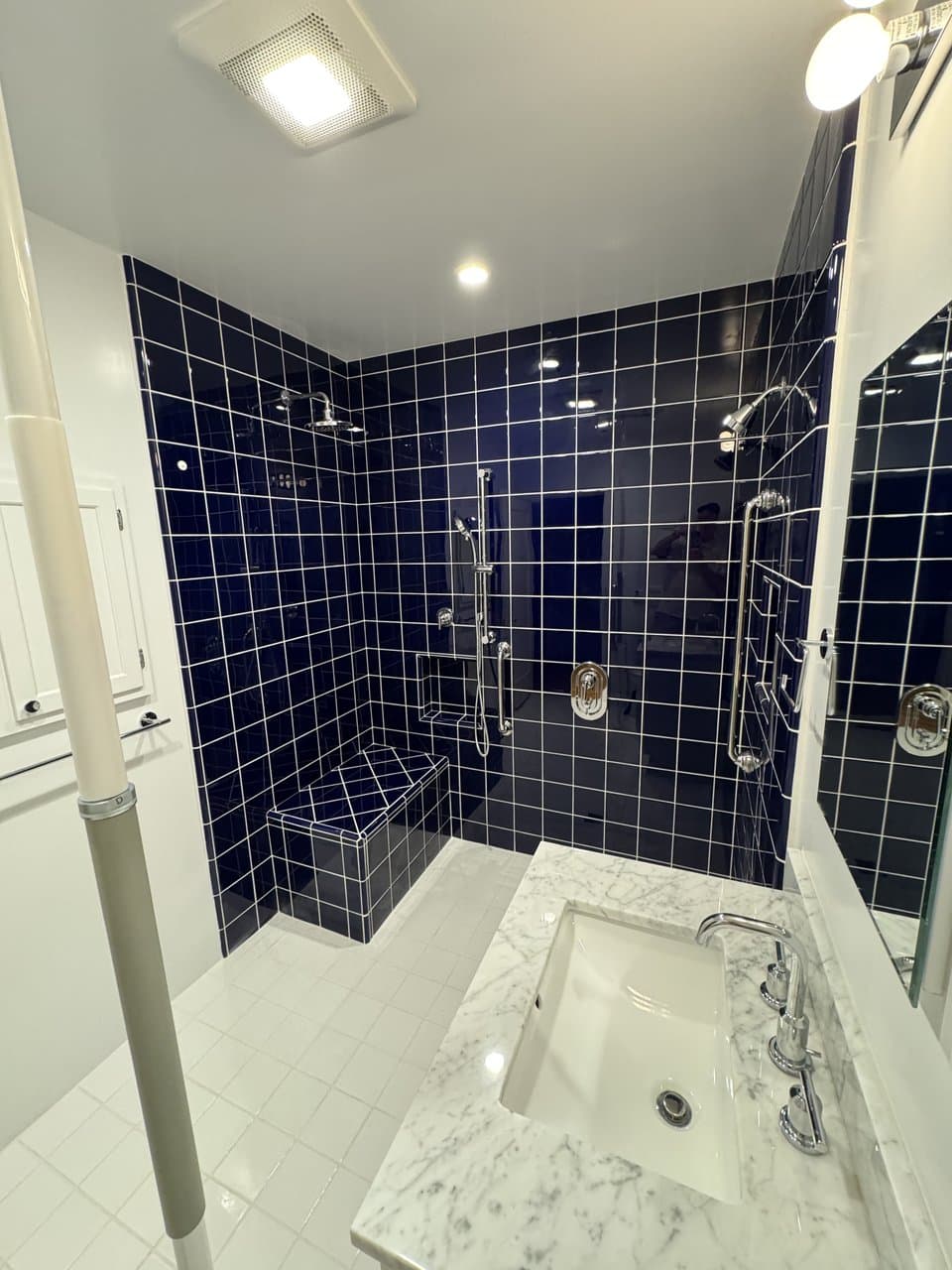
Color is the other major shift. White subway tile isn't going away, but we're setting far more colored subway than we did even two years ago. Sage green has been the runaway favorite in Sacramento—it works beautifully with white oak cabinets and warm-toned countertops, which is a combination we see constantly right now. Navy and terracotta are strong second choices, and we've done a handful of deep black subway backsplashes that look stunning against white cabinetry. Beyond color, the finish matters enormously. Handmade and crackled glazes give subway tile the textural depth it needs to compete with trendier formats. And larger sizes like 4x12 and 3x12 feel more modern than the classic 3x6 while maintaining the familiar rectangular look that homeowners are comfortable with.
Full-Height Backsplashes: Counter to Ceiling
This might be the single biggest shift in how Sacramento kitchens look in 2026 compared to five years ago. The standard 18-inch backsplash between the countertop and upper cabinets is being replaced—often enthusiastically—by tile that runs all the way from the counter to the ceiling. In kitchens with open shelving or no upper cabinets on a wall, this creates a dramatic, floor-to-ceiling tile surface that transforms the entire feel of the room.
The reasons are both aesthetic and practical. A full-height backsplash makes the kitchen feel taller and more finished. It protects significantly more wall surface from grease, steam, and splatter. And it creates a clean, unbroken visual line that pairs beautifully with floating shelves—another trend that shows no signs of slowing down. When you combine a zellige or handmade subway tile with a counter-to-ceiling installation and open shelving, the result is a kitchen that looks like it belongs in an architecture magazine, even in a modest Sacramento home.
The cost difference is real, though, and we always want homeowners to go in with clear expectations. A standard 18-inch backsplash on a typical kitchen wall might require 25 to 30 square feet of tile. Taking that same wall to the ceiling could double or triple the tile needed, depending on your ceiling height. You're looking at proportionally more in labor, too, since the upper sections require more careful work, especially around outlets and switches near the ceiling. For most of our Sacramento clients, the investment is worth it—but it's worth having a realistic conversation about budget before you commit.
Large-Format and Slab Backsplashes
On the opposite end of the spectrum from handmade zellige, there's a strong movement toward fewer grout lines—or no grout lines at all. Large-format porcelain slabs, often manufactured to mimic natural marble veining with remarkable accuracy, are showing up in Sacramento's higher-end kitchen renovations. These slabs can cover an entire backsplash wall in one or two pieces, creating a seamless, dramatic surface that's especially striking when the veining is bookmatched (mirrored across two adjacent slabs).
The appeal is clear: a slab backsplash looks incredibly clean and modern. Without grout lines interrupting the surface, the veining or pattern reads as a single piece of stone, even though it's actually porcelain. Maintenance is about as easy as it gets—just wipe it down. For homeowners who want that minimal, gallery-like kitchen aesthetic, nothing else really comes close.
The trade-offs are cost and complexity. Porcelain slabs are more expensive per square foot than standard tile, and the installation requires specialized equipment, precise measurements, and experienced hands. A cracked slab during installation is an expensive mistake, which is why this is genuinely a job where contractor experience matters. The pattern selection is also more limited compared to individual tiles—you're mostly choosing between marble looks, concrete looks, and solid colors. But for homeowners who want a clean, dramatic statement with virtually no maintenance, slab backsplashes are one of the most impactful choices available in 2026.
Pattern Play: Herringbone, Chevron & Geometric
Here's something that consistently surprises homeowners: you can take the exact same tile and create a completely different backsplash just by changing the layout pattern. A simple white subway tile in a running bond looks classic but expected. That same tile set in a herringbone pattern suddenly becomes a statement. This is one of the most cost-effective ways to get a high-impact backsplash, because you're paying for the same material but getting dramatically more visual interest.
Herringbone is by far the most-requested non-standard pattern in Sacramento right now. The V-shaped arrangement creates movement and energy on the wall, and it works with virtually any rectangular tile. We set it at a 45-degree angle most often, though some homeowners prefer a 90-degree herringbone (sometimes called a chevron arrangement) for a slightly different look. Both require more cuts than a standard layout, particularly along the edges where the pattern meets the countertop, cabinets, and ceiling. That means more labor time, and we always want to be transparent about that—pattern work typically adds 15 to 25 percent to the installation cost compared to a straight running bond.
Beyond herringbone, we're seeing growing interest in geometric tiles—hexagons, picket shapes, scallops, and arabesques. These shaped tiles make a bold statement without relying on color. A white hexagon backsplash, for instance, reads as modern and interesting despite being completely neutral. The installation for shaped tiles takes more planning and more precise cuts, but the results are worth the effort for homeowners who want their backsplash to be a conversation piece.
Ready to Update Your Kitchen Backsplash?
Whether you're drawn to handmade zellige, a bold herringbone pattern, or a sleek full-height design, Russell Tile can help you bring your vision to life. Schedule a free consultation to discuss your kitchen project.
What's Falling Out of Favor
Part of understanding where backsplash design is heading means being honest about what's losing ground. We don't say this to make anyone feel bad about their current kitchen—trends cycle, and what matters most is that you love your space. But if you're planning a renovation and want to avoid choices that will feel dated quickly, here's what we're seeing less of.
The basic glossy white 3x6 subway tile in a standard running bond has firmly entered "builder grade" territory. It's fine. It's inoffensive. But Sacramento homeowners increasingly see it as the default choice that signals a lack of design intention, much like beige carpet did a generation ago. If you love the subway format, the fix is simple: change the size, the color, the layout, or the finish. Any one of those adjustments moves it from generic to intentional.
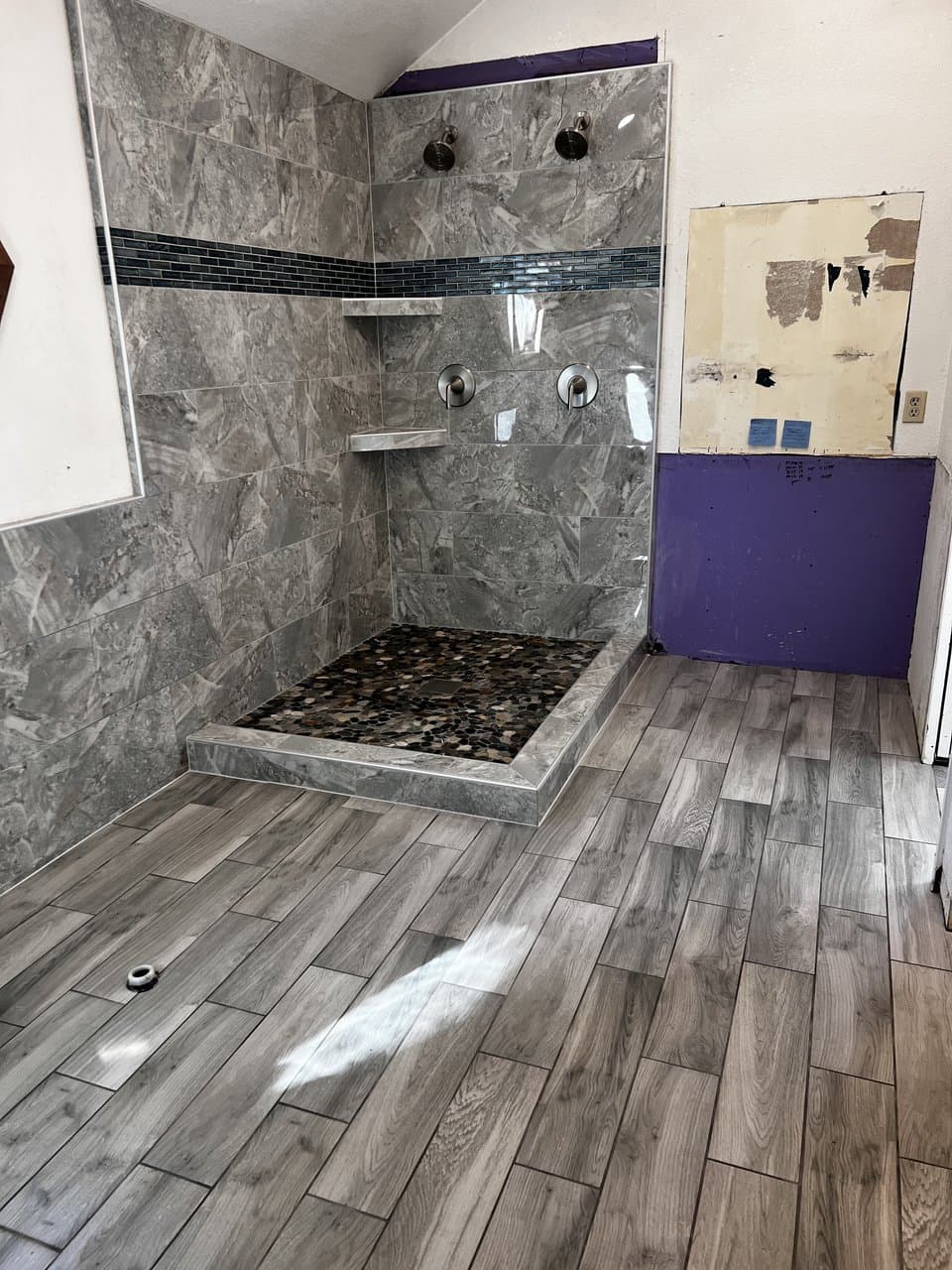
Gray tile of nearly any kind is losing momentum fast. After dominating Sacramento kitchens and bathrooms for the better part of a decade, the gray wave has crested. Homeowners are gravitating toward warmer tones—creams, warm whites, sage, terracotta—and gray is starting to feel cold and dated by comparison. This is especially true for gray glass tile and gray marble-look porcelain, both of which were everywhere from 2016 to 2022.
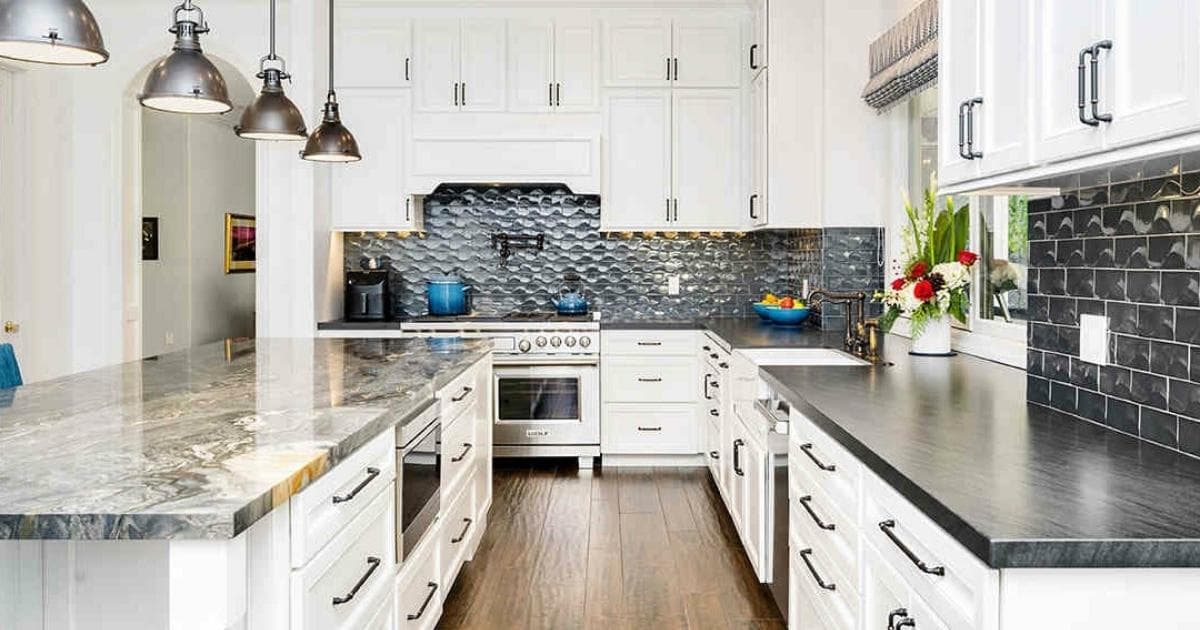
Overly busy multi-color mosaics are another casualty. Those mosaic blends that mixed five or six colors of glass, stone, and metal were popular a few years back, but they're difficult to coordinate with evolving kitchen decor and tend to make the space feel chaotic rather than curated. Tiny penny tile rounds are also declining for backsplash use—they look charming in photos, but the reality is an overwhelming amount of grout that's a nightmare to keep clean behind a stove. And finally, the contrasting "accent strip" behind the range or cooktop—where a horizontal band of decorative tile breaks up an otherwise plain backsplash—has largely run its course. It reads as a dated design move from the early 2010s.
Choosing a Backsplash That Won't Look Dated
After installing thousands of backsplashes over the past sixteen years, we've developed a pretty reliable sense of what ages well and what doesn't. The single safest long-term bet right now is a warm neutral tile with texture. Think handmade finishes in white, cream, or soft warm tones. These tiles have enough character to feel interesting but enough restraint to work with whatever cabinet color or countertop material you might choose five or ten years from now. Zellige, crackled subway, and matte handmade tiles all fall into this category.
If you want to go bold—and we genuinely encourage it when the space is right—consider doing it on a feature wall or a section of the kitchen that could realistically be updated down the road without a full renovation. The wall behind open shelving, for instance, is a great place for a dramatic colored tile, because it's visually prominent but relatively small in square footage. A bold backsplash behind the stove also works well, since that area tends to be the natural focal point of the kitchen anyway.
One of the most common mistakes we see is trying to match the backsplash too precisely to the countertop. Your backsplash should coordinate with your countertops—they should feel like they belong in the same room—but an exact match often falls flat. A little contrast, whether in color, texture, or finish, creates depth and visual interest. Let one surface be the star and the other play a supporting role.
The best way to narrow down your options is to see samples in your actual kitchen, under your actual lighting, next to your actual countertops and cabinets. Photos on a screen will always look different from tile in person. We're happy to help you think through all of this during a consultation, and you can learn more about our approach on our backsplash installation services page.
Final Thoughts
The backsplash trends we're seeing in Sacramento in 2026 share a common thread: homeowners want their kitchens to feel personal, warm, and intentional. Whether that means the handmade charm of zellige, the quiet sophistication of a full-height vertical subway installation, or the dramatic simplicity of a porcelain slab, the days of defaulting to the cheapest white tile are behind us. Even homeowners on modest budgets are making thoughtful choices about layout, color, and finish that elevate their kitchens well beyond "builder grade."
At Russell Tile, we've been helping Sacramento homeowners navigate these decisions since 2009. As a licensed contractor (CSLB #941474), we bring both the design knowledge to help you choose well and the installation expertise to make sure every tile is set right. A backsplash is one of the most visible surfaces in your home—it deserves to be done with care.